
Air Quality
Air Pollution Control: Scrubbers vs. Baghouse Filters
A technical comparative analysis of wet and dry air pollution control devices for industrial chimneys.
2 min read Aaradhya Enviro technical team
Quick answer
Bag (baghouse) filters are best for capturing dry particulate matter such as dust and fly ash, while wet scrubbers are used for acid gases, fumes, sticky or hot gas streams and odours. Many industrial processes need a combination, chosen according to the pollutant, gas volume and temperature.
1. The Mechanics of Emission Control
Industrial boilers, furnaces, and chemical reactors release a deadly mixture of Particulate Matter (PM10 and PM2.5) and noxious gases (SOx, NOx, HCl). Choosing the wrong Air Pollution Control (APC) device not only violates statutory stack emission norms but also wastes massive amounts of capital.
2. Wet Scrubbers: The Chemical Neutralizers
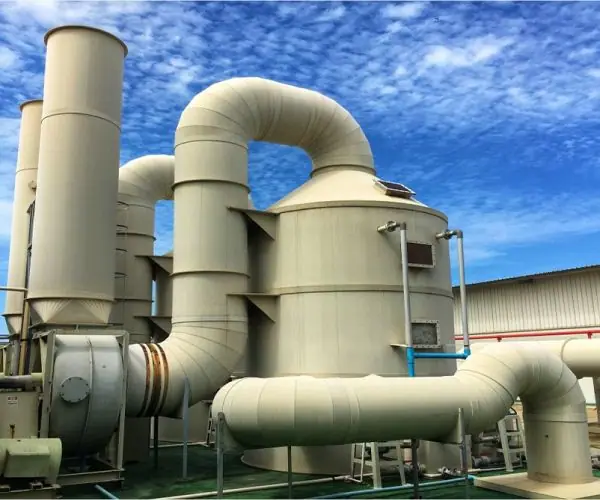
Wet scrubbers force the dirty exhaust gas into contact with a scrubbing liquid (usually water dosed with an alkaline agent like Caustic Soda). The liquid atomizes into droplets, absorbing acidic gases and capturing dust.
- Best For: Pharmaceutical, chemical, and plating industries where neutralizing toxic, corrosive fumes (like hydrochloric acid or ammonia) is the primary goal.
- Technical Drawback: They create a secondary pollution problem. The dirty scrubbing liquid becomes highly toxic wastewater that must be treated in an ETP.
3. Baghouse Filters: The Dry Vacuum
Bag filters force dirty air through hundreds of massive fabric bags. The dust forms a 'cake' on the surface of the bags, which acts as a highly efficient filter for subsequent dust. Pulses of compressed air periodically shake the bags, dropping the dust into a hopper.
- Best For: Cement plants, steel mills, and powder coating units where the pollutant is 100% dry particulate matter.
- Efficiency: Can achieve 99.9% collection efficiency, bringing stack emissions well below the 150 mg/Nm3 limit.