
Turnkey Projects
Air Pollution Control Systems
Emission control equipment selected for your pollutant, gas volume and temperature, so your stack reports stay within consent limits.
Quick answer
Boilers, furnaces, DG sets and process vents must meet the emission limits in your MPCB consent and have proper stacks with sampling ports. The right control device depends on the pollutant: cyclones and bag filters for dust, wet or venturi scrubbers for acid gases and fumes, packed-bed scrubbers for odour and soluble gases.
Reviewed by the Aaradhya Enviro compliance team · 18 October 2026
Overview
Boilers, furnaces, thermic fluid heaters, DG sets, process vents, grinding, coating and chemical reactions all release particulate matter, acid gases, fumes or odour. MPCB consents specify emission limits and require proper stacks with sampling ports, and stack monitoring reports are checked during every inspection.
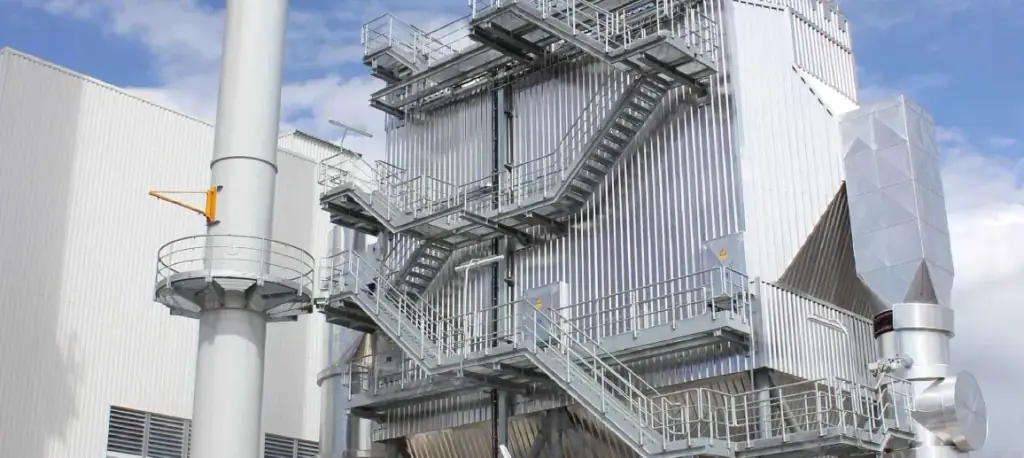
The right control device depends on the pollutant. Cyclones and multi-cyclones remove coarse dust, pulse-jet bag filters capture fine particulates, wet and venturi scrubbers neutralise acid gases and fumes, and packed-bed scrubbers handle soluble gases and odours. We study your process and emission profile, design the system and ducting, fabricate and erect it, and verify performance with stack monitoring.
Who needs this service
- Units with boilers, thermic fluid heaters, furnaces or incinerators
- Foundries, forging, metal finishing and surface coating units
- Chemical, pharmaceutical and fertiliser plants with process vents
- Units that failed stack monitoring or received an emission-related notice
What we cover
Emission study
Gas volume, temperature, pollutant type and concentration.
Equipment selection
Cyclone, bag filter, wet / venturi / packed-bed scrubber or combination.
Ducting & fan design
Hood design, duct sizing, pressure-drop calculations and ID fan selection.
Stack design
Stack height and diameter, sampling ports and platform as per norms.
Fabrication & erection
Material selection (MS, SS, FRP, PP), fabrication and installation.
Performance testing
Stack monitoring through accredited laboratories after commissioning.
Our process
-
Step 1
Process study
We identify each emission source and its characteristics.
-
Step 2
Design
Equipment sizing, ducting layout and stack design.
-
Step 3
Proposal
Clear scope, drawings and material specifications.
-
Step 4
Fabrication
Shop fabrication with quality checks.
-
Step 5
Erection & start-up
Installation, balancing and commissioning.
-
Step 6
Verification
Stack monitoring to confirm compliance with consent limits.
What you receive
- Emission source inventory
- Design calculations and GA drawings
- Equipment and material specifications
- Commissioning record
- Post-installation stack monitoring report
Applicable regulations
- Air (Prevention and Control of Pollution) Act, 1981
- Emission standards in the Environment (Protection) Rules and your consent
- CPCB guidelines on stack height and sampling facilities
Regulations are amended from time to time; we always work to the version currently in force and the conditions in your own consent.
FAQ
Air Pollution Control Systems: frequently asked questions
Which is better: a bag filter or a wet scrubber?
Why does my stack fail monitoring even with a scrubber installed?
Do you provide stack monitoring?
Related services
Air, Water & Soil Testing
Stack, ambient air, effluent, drinking water and soil testing with compliance interpretation.
Learn moreOnline Monitoring Systems (OCEMS)
Online continuous emission and effluent monitoring connected to CPCB / MPCB servers.
Learn morePlant Up-gradation & Retrofit
Performance audits, capacity enhancement and retrofits for under-performing treatment plants.
Learn moreMPCB Consent & Legal Compliance
Consent to Establish (CTE), Consent to Operate (CTO), renewals, amendments and statutory filings with MPCB.
Learn moreFurther reading
Discuss Air Pollution Control Systems with our team
Share your requirement and get a clear scope, timeline and estimate.