
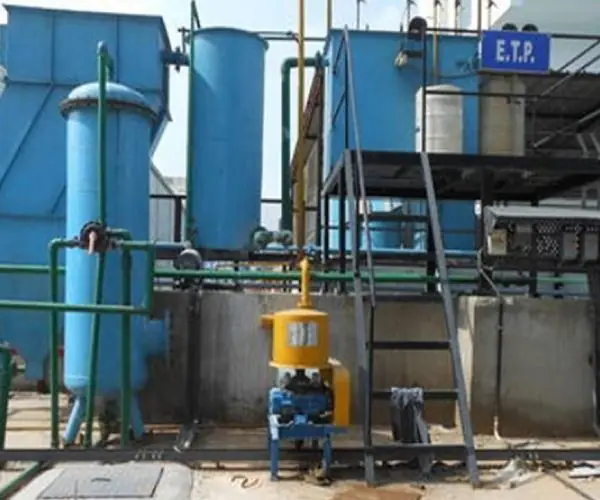
Turnkey Projects
Plant Up-gradation & Retrofit
Bring an old or overloaded treatment plant back within norms, often without rebuilding it from scratch.
Quick answer
An existing ETP or STP that fails consent limits can often be fixed without rebuilding. A performance audit compares actual flow and load with the design; common upgrades include MBBR conversion for extra capacity, efficient blowers and fine-bubble diffusers, tertiary filtration, better sludge handling and automation, carried out in phases to keep the plant running.
Reviewed by the Aaradhya Enviro compliance team · 18 October 2026
Overview
Treatment plants fall behind for predictable reasons: production has grown, the effluent has changed, equipment has aged, or the original design was never adequate. The result is treated water or stack emissions that exceed consent limits, frequent breakdowns and notices from MPCB.
We start with a performance audit to measure actual flows and loads against the design and find the bottlenecks. Typical solutions include converting aeration tanks to MBBR to increase capacity in the same footprint, upgrading diffusers and blowers, adding tertiary filtration, improving sludge handling and adding automation. Work is planned in phases to keep downtime to a minimum.
Who needs this service
- Plants that do not meet consent discharge or emission limits
- Units that have increased production since the plant was built
- Old plants with frequent breakdowns or high power and chemical costs
- Units that want to reuse treated water
What we cover
Performance audit
Flow, load and unit-wise efficiency measurement against design.
Capacity enhancement
MBBR / IFAS conversion, extra stages and hydraulic corrections.
Equipment upgrade
Energy-efficient blowers, fine-bubble diffusers and better pumps.
Tertiary treatment
Pressure sand filter, activated carbon filter, UF and disinfection.
Sludge handling
Filter press, screw press or sludge drying bed upgrades.
Automation
Level controls, VFDs, dosing automation and online meters.
Our process
-
Step 1
Audit
We measure what the plant is actually doing.
-
Step 2
Root-cause report
We identify the bottlenecks and their cost impact.
-
Step 3
Options & costing
Several upgrade options, from low cost to full capacity increase.
-
Step 4
Phased execution
Work scheduled to keep the plant running.
-
Step 5
Re-commissioning
Performance proving after the upgrade.
-
Step 6
Monitoring
Follow-up testing to confirm stable results.
What you receive
- Performance audit report
- Upgrade options with cost estimates
- Revised design and drawings
- Re-commissioning test reports
- Updated SOPs and operator briefing
Applicable regulations
- Discharge and emission limits in your MPCB consent
- Environment (Protection) Rules, 1986
Regulations are amended from time to time; we always work to the version currently in force and the conditions in your own consent.
FAQ
Plant Up-gradation & Retrofit: frequently asked questions
Can we increase STP or ETP capacity without new civil tanks?
Will the plant have to be shut down during the upgrade?
Can an upgrade reduce our power bill?
Related services
ETP & STP Design and Installation
Turnkey Effluent and Sewage Treatment Plants: design, supply, installation, commissioning and handover.
Learn moreOperation & Maintenance (O&M)
Trained operators, daily logs, testing and preventive maintenance for ETP, STP, RO and ZLD plants.
Learn moreTreatability Studies
Lab and pilot trials that prove the right treatment process before you invest.
Learn moreZLD & RO Systems
Zero Liquid Discharge and industrial RO: water recovery with UF, RO, evaporators and dryers.
Learn moreFurther reading
Discuss Plant Up-gradation & Retrofit with our team
Share your requirement and get a clear scope, timeline and estimate.