
Water Treatment
Preventing Reverse Osmosis (RO) Membrane Failure
Technical deep-dive into combating organic fouling, inorganic scaling, and catastrophic membrane oxidation.
2 min read Aaradhya Enviro technical team
Quick answer
Most RO membrane failures come from scaling, fouling or chemical damage. Prevention means good pre-treatment, correct antiscalant dosing, monitoring normalised flow and pressure drop, timely clean-in-place (CIP) and keeping oxidants such as chlorine away from the membranes.
1. The Vulnerability of RO Membranes
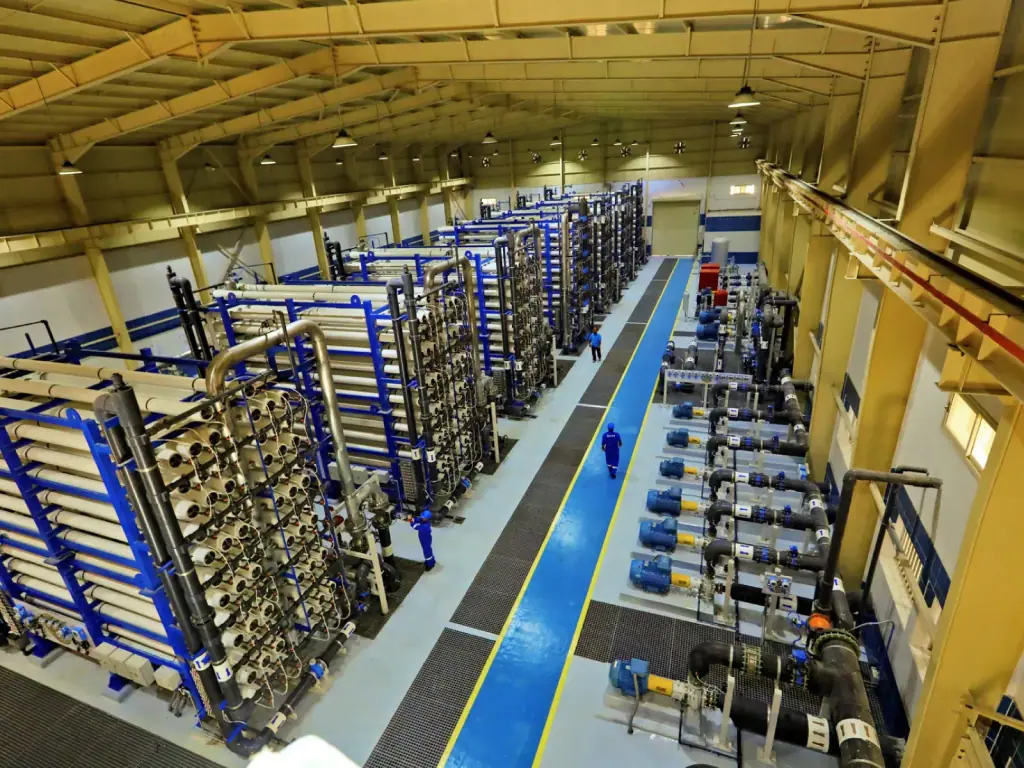
Reverse Osmosis (RO) membranes are the most expensive operational consumable in any wastewater recycling or ZLD plant. They feature microscopic pores capable of rejecting dissolved ions (salts) at the molecular level. However, this extreme precision makes them incredibly fragile.
2. The Three Horsemen of Membrane Death
Membrane lifespan is typically 3-5 years, but can be destroyed in 3 weeks if the following factors are ignored:
-
1
Scaling (Inorganic Precipitation)
As RO extracts pure water, the rejected water (brine) becomes super-concentrated. Salts like Calcium Carbonate, Calcium Sulfate, and highly destructive Silica precipitate into hard crystals directly onto the membrane surface, permanently blocking flow. Solution: Precise dosing of advanced polymeric antiscalants.
-
2
Fouling (Organic & Biological)
Bacteria thrive in the dark, nutrient-rich environment of an RO housing. They form thick, impenetrable biofilms (slime) on the membrane. Solution: Upstream chlorination combined with Ultrafiltration (UF) to drop the Silt Density Index (SDI) below 3.
-
3
Oxidation (Chemical Destruction)
Thin Film Composite (TFC) polyamide membranes are instantly destroyed by free chlorine. If the upstream chlorination (used to kill bacteria) reaches the membrane, the polymer burns away, and salt rejection drops to zero. Solution: Dosing Sodium Metabisulfite (SMBS) perfectly via ORP meters to neutralize all chlorine before the high-pressure pump.